Greetings fellow 4MGer!
If you’re following along on our Roman soldier from last week, we have come to
the final piece of the amor of God —
17 Take the helmet of salvation and the sword of the Spirit, which is the word of
God.
Like the helmet, the Sword of the Spirit is something we “take up” that is,
something we need to be active about, but unlike the helmet, the sword is spelled

out for us – it is the Word of God. Does anyone else find it ironic that if you just
move the letter “s” then “sword” becomes “words”?
So far, we have put on the girdle of truth, knowing in our core that God loves us.
We have put on the breastplate of righteousness to guard our heart knowing right from wrong. We have made ourselves ready in the sandals of the Gospel of peace. We are secure with faith as our shield protecting us from fear and salvation as our helmet keeping us from doubt and temptation. We should be all set, right?
While all the above armor is well and truly protective, it is all defensive. It helps
us to stand firm in the world and take what literal, metaphorical and spiritual slings
and arrows the world may throw our way. But it does not allow us to fight back.
A sword is an offensive weapon. And in that way that the enemy twists all things,
it is no accident that some people say that they find the word of God offensive.
Perhaps they are supposed to – when you are offended it means you have been
made uncomfortable. It is uncomfortable to have to reconsider the way you think
about the world—and that is often what happens when we read the Bible.
When I was in my teens, I thought I knew about God. I was raised to believe; I
went to church on Sunday; I studied in Sunday School; I was an acolyte. I felt that
I didn’t need to read the Bible beyond that—those snippets of Scripture in the
lessons during service and the minister’s explanation during the sermon—they
were sufficient even though they were, frankly, kind of boring. And reading the
Bible on my own was SO frustrating. I remember being in confirmation class
asking Reverend Eads endless questions “Who were the people outside of Eden?
Did people really live hundreds of years or was their math different than ours?
Why did God harden Pharaoh’s heart so that he wouldn’t release the Jews from
slavery? Why did God let all that awful stuff happen to Job? Is James the actual
brother of Jesus?” and on and on. I am sure I was a most annoying teenager.
I remember asking my mom “When someone living in a tribe in the Amazon dies,
do they get to go to Heaven even though they don’t believe in God? If not, why
not? It’s not their fault they never heard of Him.” She never appreciated my
constant questioning—to her it was a matter of Faith. And although she and my
father read the Bible more than most folks, she wasn’t a person who needed to
have all the questions answered like I was. I thought it made her Belief simple and
uneducated (at that point I was a sophisticated college student, after all). I know
now that it was quite the opposite. Believing with your whole heart, without the
need to be convinced or to know all the answers—that is Faith, and it is a true
blessing.
Fortunately for folks like me, we now have the Internet and there are many, many
places to look to find answers—or at least discussions about—pretty much any
question that arises as you read Scripture. But that doesn’t mean that you still
don’t have to read objectively and think about what is said and understand what
that means to you or for you, and that there might be some things you need to
change about your life, which is uncomfortable. And too many people today will
do anything to avoid feeling uncomfortable—which is sad, because that is where
growth happens.
While the Bible is the story of the world and of the Jewish people (Old Testament)
and then Jesus and the Christians (New Testament), it is made up of many books,
some of which flow together and some that don’t seem to. Although many are
familiar with the opening line of the first book called Genesis – In the beginning,
God created the heaven and the earth—most new bible-readers are encouraged to
start with the book of Psalms. Psalms is often referred to as a book of poetry or
songs, and are smaller, more approachable writings that are written on a certain
theme. A lot of people find great comfort and peace from reading the psalms and
lots have a favorite or two.
My preference is the book of Proverbs. Proverbs is generally considered a book of
“wisdom sayings” and I like to read a line or two and then think about it for the
day. You are probably already familiar with some – remember the quotes we
shared for the Gospel of Peace? – many of those are from Poverbs. Here’s a few
more:
17:12 Better to meet a bear robbed of her cubs than a fool bent on folly.
19:13 A foolish child is a father’s ruin, and a quarrelsome wife is like the
constant dripping of a leaky roof.
26:1 2 Do you see a person wise in their own eyes? There is more hope for a
fool than for them.
16:18 Pride goes before destruction, a haughty spirit before a fall.
It’s a little concerning how many proverbs talk about the misery of quarrelsome
wives, but regardless, I feel they are short and easy to comprehend, and usually
get more meaningful the longer you think about them.
Jesus says this to Paul about his calling as an apostle in Acts 26:17-18:
“I will rescue you from your own people and from the Gentiles. I am
sending you to them to open their eyes and turn them from darkness to
light, and from the power of Satan to God, so that they may receive
forgiveness of sins and a place among those who are sanctified by faith
in me.”
As young ladies it is daunting to think of going out into the world to fight darkness. If that is what you feel called to do when you are adults, so be it, but for right now I believe the way you take up the Sword of the Spirit is to read your Bible—even if it’s just a tiny Proverb on Sunday night. Although I am clearly championing the Word of God to you all, my goal every week is to shed a little light on the darkness
I find in myself. Because as I become a better person who is more in touch with what God wants from me, I am a better example and my actions reflect more kindly on the world around me.
Any old token wouldn’t do this week, so you older girls all have a pocket Bible – it is the New Testament which is about Jesus’ life and ministry and about what the apostles did after He was gone. It also includes the Psalms and the Proverbs, in case you’d rather start there.
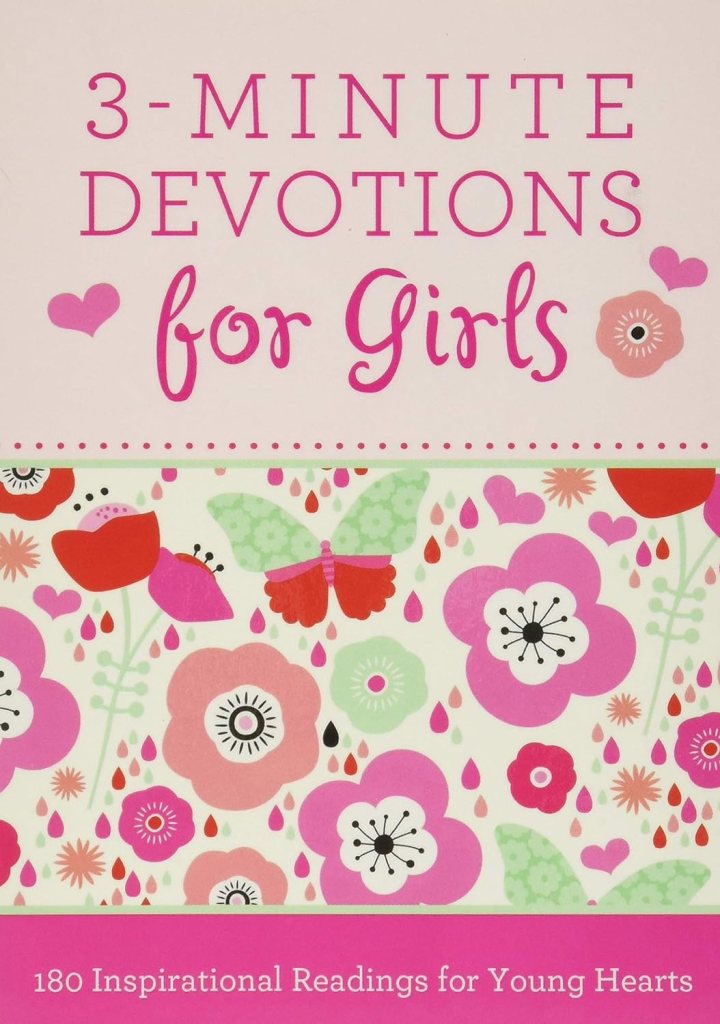
Everyone also got a little pocket devotional – each page has a Bible verse and a short explanation. Many people find that reading a page from a devotional in the morning is a great way to set the tone for their day. I love that idea—but you all know me better than to think that might happen. Because my mornings are so… haphazard, I try to set aside 10 minutes after I take Lilly for her walk to sip a little
tea, read a verse or two and plan the things I have to accomplish before bed.
As you look through the books make a note of anything you’d like to discuss or
explore farther. I can definitely see a page or two of the devotional becoming
future lessons – such as page 119 which is about settling differences with people
and not gossiping, or how to overcome obstacles (pg 62) or deal with rejection (pg
63).
 4MG.org
Leave a comment